The EU AI Act: What every business building with AI needs to know before August 2026
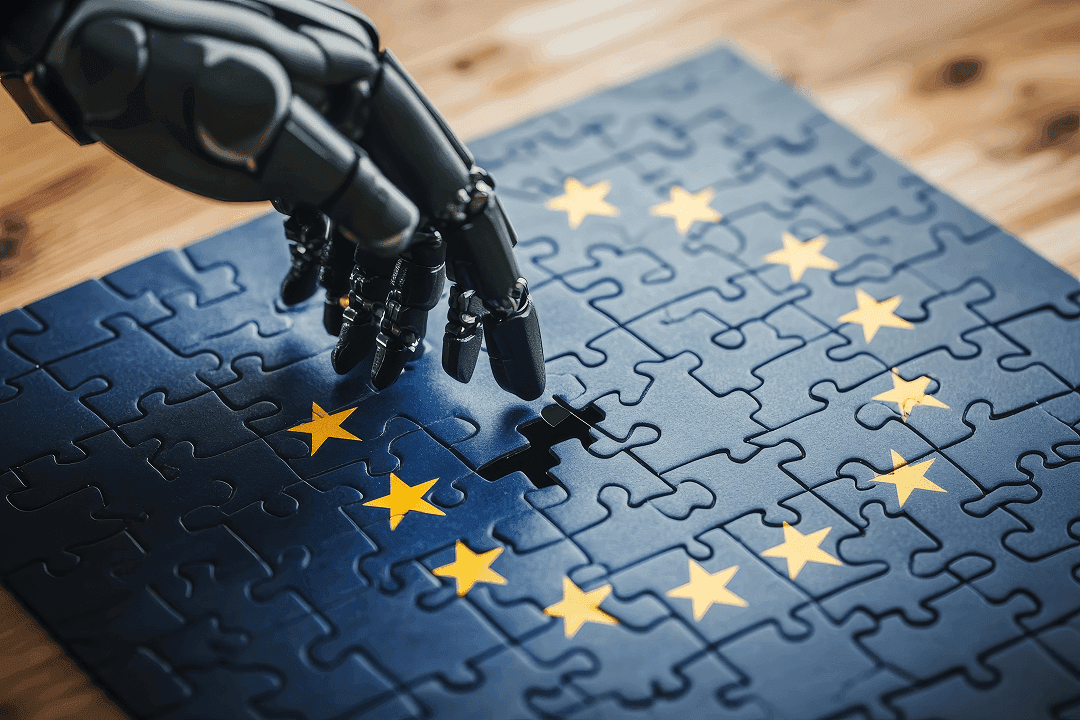
Most founders we talk to have heard of the EU AI Act. Fewer of them have actually read it. Even fewer have done anything about it. If your business builds, deploys, or even just uses AI tools, and serves anyone in the EU, this is the regulation that is going to matter most in 2026.
This new regulation tries to balance innovation while protecting fundamental human rights. Understanding them is not just a nice benefit to have, but it's absolutely crucial if you use AI.
The act itself has a whole philosophy behind it: AI should be human-centric. It should be a tool for people aiming to increase their well-being. The act emphasises using AI responsibly, without stopping progress.
This enables developers to build and sell their AI without hitting a wall of different laws in every country. On the other hand, it's building trust, making sure we all feel confident that this technology is safe and respects our basic rights.
It's like GDPR but for AI
When GDPR came into force in 2018, most businesses scrambled at the last minute. Some paid fines. Most updated their privacy policies and moved on. The EU AI Act is following a similar trajectory, except the fines are bigger, the scope is wider, and the compliance work is more complex.
The Act entered into force in August 2024. Some prohibitions have already been in place since February 2025. The major deadline lands on 2 August 2026, although EU institutions are currently considering amendments that could push some high-risk deadlines later.
The most important part is your role in this. You can be:
- A provider: someone who builds AI systems from the ground up. They have the most responsibility.
- A deployer - Anyone who uses AI as part of their business. For example, an HR department screening resumes or a customer support chatbot. This category is where most businesses fall into.
Unlike GDPR, which was largely about data, the AI Act is about what your systems do with that data and how they make decisions.
The critical mistake many businesses make is assuming they are in the minimal risk category without actually checking. If your AI touches hiring, onboarding, customer scoring, or anything that filters or ranks people, you are likely dealing with high-risk territory.
The scope might surprise you
One of the most underappreciated aspects of the EU AI Act is its extraterritorial reach. You do not need to be based in the EU for this to apply to you. If your product is used by even one person in an EU member state, and your AI system falls within scope, the Act can apply.
This is the same principle that made GDPR relevant for companies in the US, Australia, and everywhere else. The EU AI Act works the same way. "We are not in Europe" is not a compliance strategy.
Understanding your role is the first step to learning about your legal duties. This act has a risk system, which puts all AI into neat categories. Here is a simplified chart of the 4 risk categories:
The risk categories simplified
Minimal risk
Very limited AI Act obligations. Most everyday AI features in standard software fall into this category.
You still need to comply with general laws (like GDPR), but there are few AI-specific requirements.
Transparency obligations (often called "limited risk")
Some AI systems must be clearly disclosed.
If users are interacting with an AI (like a chatbot) or viewing AI-generated or manipulated content, they need to be informed.
High risk
Strictly regulated. Certain use cases defined in the Act, like hiring systems, credit scoring for individuals, medical devices, and law enforcement - fall here.
Unacceptable risk
Prohibited outright. This includes certain harmful or exploitative uses of AI, such as social scoring by governments, AI that manipulates behaviour in ways that can cause harm, certain uses of biometric identification in public spaces.
These prohibitions have applied since February 2025.
Where your AI is on this ladder dictates everything you need to do. Most AI systems are going to live in the minimal risk category. We are talking about spam filters or video games. The unacceptable risks are things that are outright banned. For example, social scoring by governments. For businesses, it's something like emotion recognition systems in the workplace or schools.
If you are a deployer and are using AI for recruitment or credit scoring, those systems might be classified as high risk. The reason is that a bad decision from that AI could have a massive impact on a person's life. If you use AI for these purposes, you must follow a strict set of rules. You need a continuous risk management system. You have to ensure your data is high-quality and free from bias. You need logs to trace how it works. And maybe most importantly, you have to build with meaningful human oversight.
Before, the rules were all over the place, totally fragmented. The approach was reactive. We'd wait for something to go wrong. Now, it's a harmonised, predictable framework that's proactive.
It forces you to think about risks before they happen. We're moving beyond just GDPR and data privacy to a much bigger picture. Safety, rights, ethics, etc.
The penalties for getting this wrong are staggering. We're talking up to 35 million or even 7% of your total worldwide turnover. That's a number that can put you out of business.
In conclusion
AI is reshaping our entire world. And this act is more than just a regulatory headache. It's really an opportunity. It's a chance to get ahead of the curve, to build products and services that people genuinely trust, and to lead the charge in responsible innovation.
The real question isn't if you need to adapt, but whether your business is ready to lead.
At Appify Digital, we have been building AI into our products with exactly this in mind — our AI consultants in Ireland design for the Act's requirements from day one. If you want to talk through what the EU AI Act means for your specific product, get in touch.