Smart ERPs for small businesses: A comprehensive guide (part 1)

Reading time: 8 minutes
Table of Contents:
- What is an ERP?
- What aspects of a business does an ERP handle?
- The difference between traditional and AI-powered ERPs
- The 6 superpowers of AI-powered ERPs
- Deciding to go for custom ERPs
What is an ERP?
ERP (Enterprise Resource Planning) is a software platform that combines all the key aspects of running a business: finance, inventory, HR, customer management, manufacturing, service management, and more. Without an ERP, all these systems are disconnected. Nobody in your business sees the full picture.
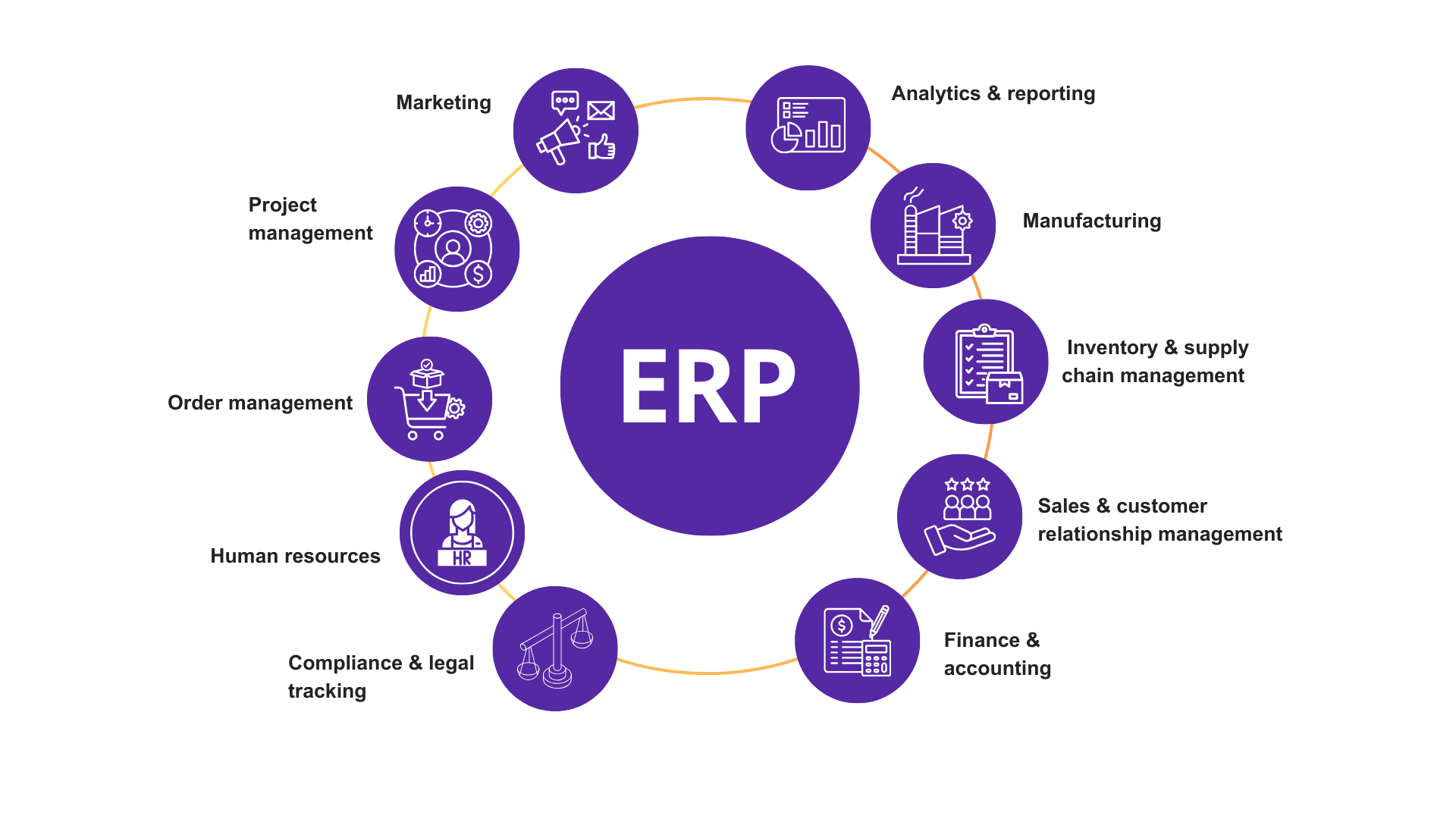
Once your business scales to a size that becomes difficult to manage due to disconnects across teams, you are ready to implement an ERP.
What aspects of a business does an ERP handle?
Inventory & supply chain management: stock levels, reorder points, warehouse locations, supplier info, lead times, shipping/delivery, alerts for low stock or delays.
Finance & accounting: invoicing, billing, accounts payable/receivable, payroll, taxes, general ledger, balance sheets, Budgeting, forecasting, cash flow tracking.
Human resources: employee data, contracts, time tracking, payroll integration, benefits, performance reviews.
Sales & customer relationship management (CRM): leads, deals, opportunities, customer data, purchase history, sales pipeline, KPIs, conversion rates.
Order management: order processing, invoicing, shipping, order status, customer notifications, returns and refunds.
Project management: deadlines, task ownership, dependencies, time allocation, progress tracking, internal vs external project status.
Marketing: campaign tracking, email performance, social media metrics, lead scoring, ROI on ad spend.
Manufacturing: bill of materials, production orders, machine maintenance, capacity planning, quality control logs.
Compliance & legal tracking: audit trails, certifications, document storage, regulatory compliance (GDPR, HIPAA, etc.), license expirations, contract deadlines.
Analytics & reporting: dashboards, KPIs, data visualisations, Predictive analytics (AI-powered ERPs), exportable reports for stakeholders.
The difference between traditional and AI-powered ERPs
Not all ERPs are created equal. Traditional systems focus on static processes and manual input, while AI-powered ERPs learn, predict, and adapt. The difference? One reacts. The other anticipates.
| Feature | Traditional ERP | AI-powered ERP |
|---|---|---|
| User interaction | Menus and forms | Conversational UI (NLP, chatbots, voice commands) |
| Data handling | Manual input, limited automation | Predictive analytics, anomaly detection, auto-entry, AI summarisation |
| Decision support | Static dashboards, human-driven reports | Smart recommendations, personalised insights |
| Workflow automation | Rule-based, requires setup and scripting | Self-learning automation, triggers, proactive alerts |
| Fraud/error detection | Manual audits, after-the-fact checks | Real-time anomaly/fraud detection via AI |
| Scalability & UX | Complex to adapt, requires IT support | Adaptive UI, task personalisation, low-code extensions |
The 6 superpowers of AI-powered ERPs
ERPs which have AI integrated can be different when it comes to how they use this new technology, but we have noticed the most common use cases for AI in ERPs:
● Natural language interfaces (chat, voice, search): Let users interact with the ERP by typing or speaking naturally. No menus, no hunting - just "Show me last month's expenses" and it does.
● Smart process automation (invoice processing, supply chain triggers): Automatically handles repetitive tasks like invoice entry, approvals, and supply chain alerts so humans don't waste time on grunt work.
● Predictive & prescriptive analytics: Forecasts what will happen (predictive) and suggests what to do about it (prescriptive) using patterns hidden in your business data.
● Intelligent recommendations: Guides users with next-best actions - which supplier to pick, which lead to prioritise, or what workflow needs attention.
● Fraud & anomaly Detection: Spots unusual transactions, errors, or suspicious patterns in real time to prevent financial or operational damage.
● Enhanced reporting & auto-generated insights: Creates summaries, dashboards, and insights instantly: no manual report-building, no data crunching, just ready-to-use intelligence.
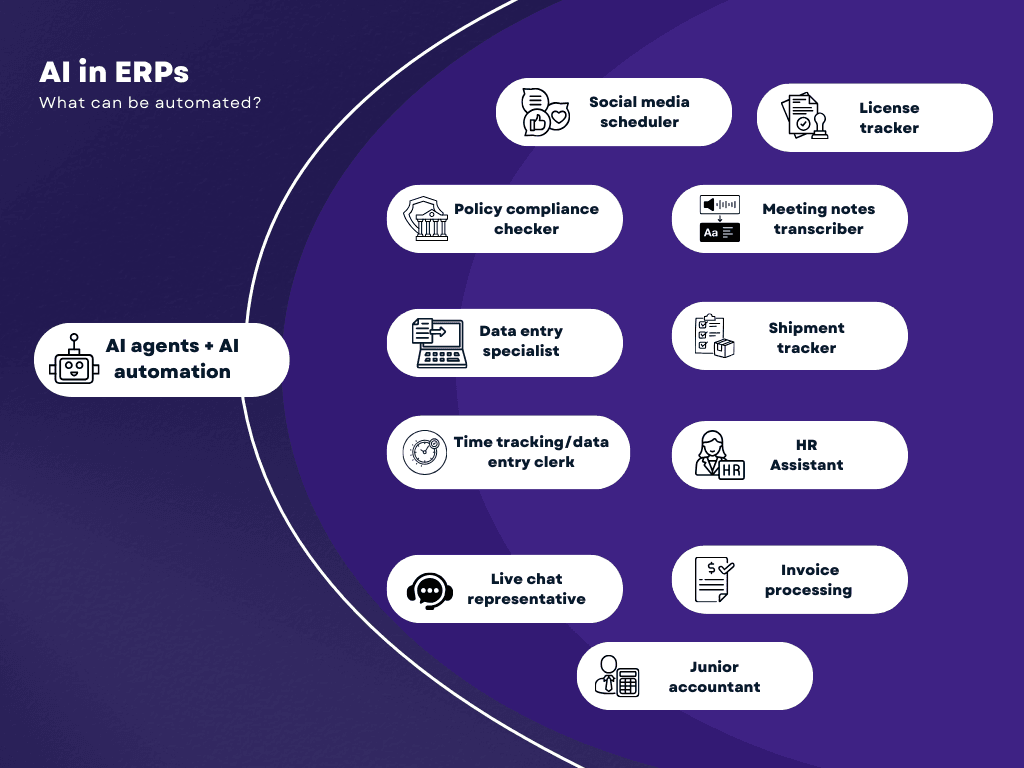
Deciding to go for custom ERPs
Not every business fits into a box, and not every ERP should either. If off-the-shelf tools feel limiting or messy, a custom ERP might be your best move.
Appify specialises in building smart, scalable, AI-powered ERP systems tailored to your workflow. Whether you're scaling fast, managing chaos, or just need a tool that actually fits, we're here to help.
Let's build something that works for you.
Part 2 coming soon...
Coming up in Part 2: custom ERPs and why building one today is easier than ever. We're excited to see you in part 2!
Appify Digital is a leading web and mobile app development company in Dublin, serving clients across Ireland and the UK. We specialize in creating innovative, AI-powered solutions that deliver exceptional user experiences and drive business growth.